New Publication! Untangling Rhetoric, Pathos, and Aesthetics in Data Visualization
We are happy to announce that our paper "Untangling Rhetoric, Pathos, and Aesthetics in Data Visualization" was accepted to IEEE Transactions on Visualization and Computer Graphics (TVCG). Verena Prantl will present this work at this year's IEEE VIS conference in Boston.
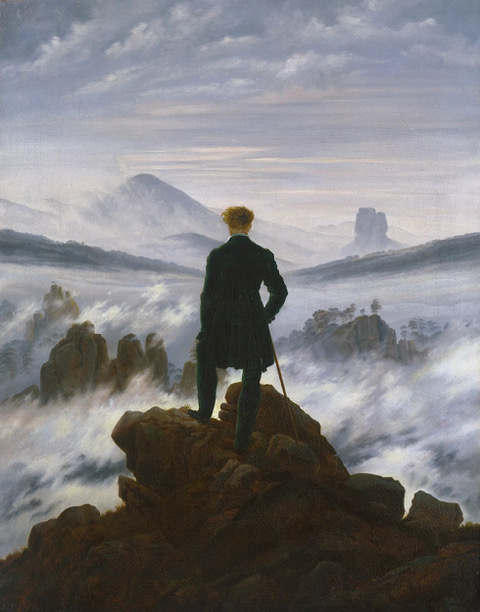
In this paper, we provide a conceptual and historical synthesis of rhetoric, pathos (emotional appeal within rhetoric), and aesthetics, and examine how these concepts shape the design and interpretation of data visualizations. While visualizations are often seen as neutral and objective, design choices actively influence meaning, interpretation, and emotional response. Although recent research has explored affect, its connection to rhetorical and aesthetic theory remains underdeveloped.
To explore this, we draw on foundational theories from rhetoric and aesthetics, tracing their evolution from classical philosophy to contemporary visualization. Integrating insights from computer science, social sciences, and the humanities, we frame rhetoric as a strategic foundation for visualization, pathos as its emotional component, and aesthetics as the sensory medium through which both are conveyed.
Building on George Campbell's Philosophy of Rhetoric, we adapt his “seven circumstances” into a framework for analyzing and designing visualizations. Our analysis shows how rhetorical strategies, emotional engagement, and aesthetic choices are deeply intertwined, and how their deliberate and ethical use can enhance clarity, credibility, engagement, and understanding — while also reflecting on risks such as manipulation or introducing potential biases.
By providing definitions, historical context, and an interdisciplinary synthesis, this work offers a shared conceptual foundation for researchers and designers to think critically about persuasion, emotion, and aesthetics in data visualization.
Citation to paper: Verena Prantl, Torsten Möller, Laura Koesten. 2026. Untangling Rhetoric, Pathos, and Aesthetics in Data Visualization. In IEEE Transactions on Visualization and Computer Graphics, 32/2, 19 pages. DOI: 10.1109/TVCG.2025.3628181
Keywords: Human-centered computing, Visualization, Emotion/Affective computing, Visual rhetoric